Trees on Graves
At some of our burial grounds, families have the opportunity to dedicate a tree in memory of someone buried there.
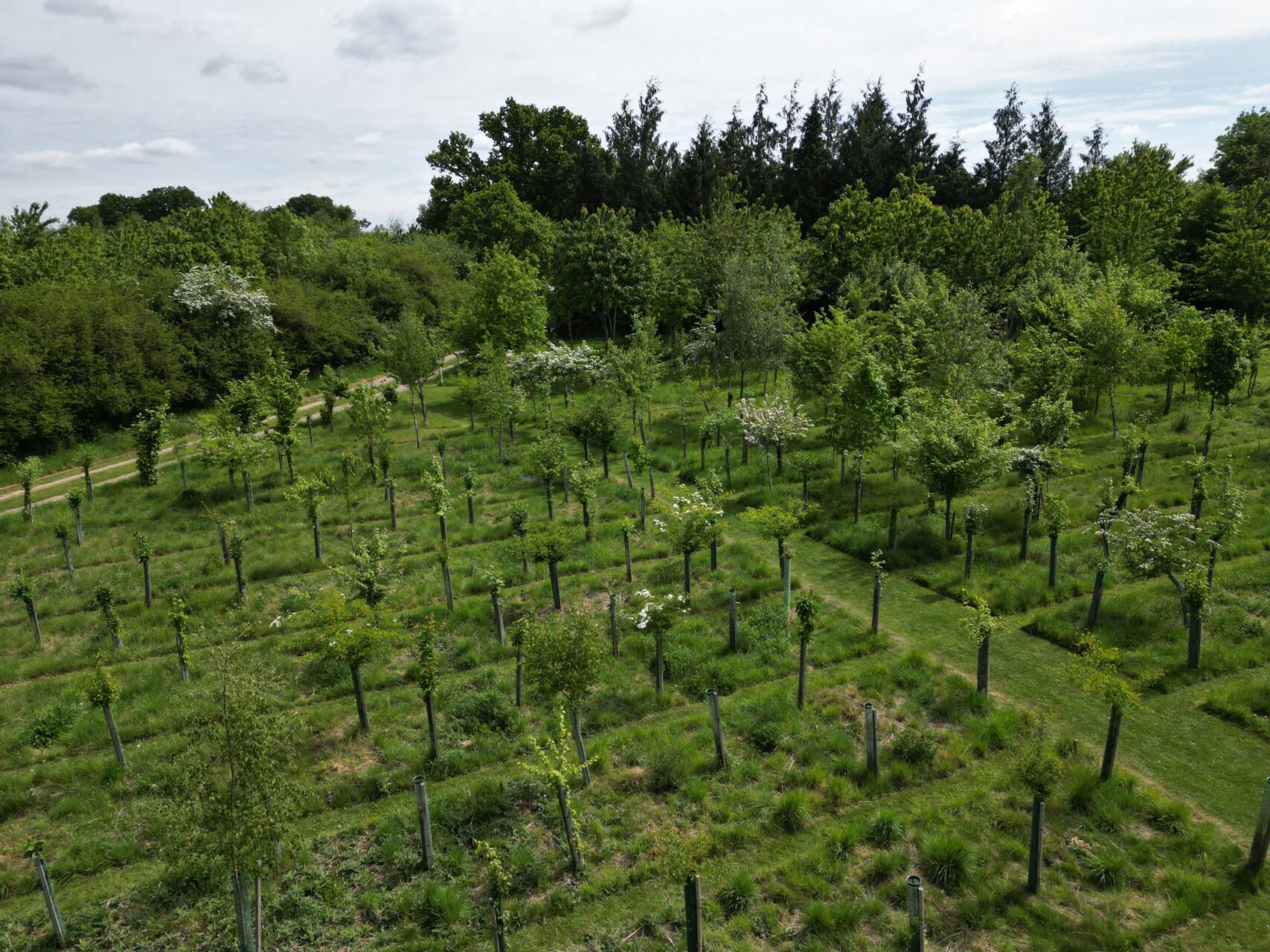
Rather than planting a tree directly on top of an individual grave, trees are planted in carefully chosen areas of the burial ground, forming small copses or woodland areas.
These locations are selected so that tree roots will not be damaged by the digging of future graves.
Many families understandably like the idea of planting a tree on a grave. However, there are several practical reasons why this approach can be difficult to manage in the long term.
Why Trees Are Not Planted Directly on Graves
Space for Trees to Grow
Trees need significant space to grow and reach maturity. Graves are not spaced far enough apart to allow each tree the room it needs to develop fully.
If trees were planted on every grave, many would struggle to survive as they competed for light, water, and nutrients.
Creating Healthy Woodland
When woodland is established, trees are usually planted in groups of similar species rather than as individual specimens.
Over time, woodland management often involves removing weaker trees so that stronger ones can continue to grow.
If trees were individually dedicated on graves, this process could be upsetting for families if their tree needed to be removed.
Access for Future Burials
As trees grow, their roots spread beneath the ground and their branches extend above.
Planting trees directly on graves would eventually make some areas difficult to access for future burials, and digging new graves could damage the roots of established trees.
This is why trees are planted in designated woodland areas instead.
Soil Conditions
The soil in and around graves has been disturbed during excavation, which can weaken its structure.
Trees planted in this ground may struggle to establish strong roots and may be more vulnerable to being blown over during strong winds.
Cremated Remains and Plant Growth
If cremated remains are placed around a tree, they should be spread thinly or mixed with soil or compost.
Cremated ashes contain salts and minerals that can form a concentrated, chalky mass, which may affect plant growth if they are placed directly in one area.
Ground Settlement
After a burial, the ground naturally settles over time.
If a tree is planted directly above the grave, the tree may settle with the soil and its growth point could end up below ground level, which can harm the health of the tree.
Long-Term Woodland Care
Creating and caring for woodland requires ongoing management.
Timber alone does not provide enough income to maintain woodland areas over the long term, so natural burial grounds must be carefully planned to ensure the landscape can be sustainably managed for future generations.
By planting trees in designated areas rather than directly on graves, we can create healthy woodland while protecting both the burial ground and the surrounding environment.
Remembering Someone Through Trees
For families who wish to remember someone through nature, dedicating a tree within a woodland area can be a meaningful tribute.
Over time, these areas develop into living landscapes that continue to grow and change, providing a peaceful place for reflection and remembrance.
Frequently Asked Questions
Can a tree be planted directly on a grave?
Trees are usually not planted directly on graves because their roots and future growth could interfere with nearby graves and make future burials difficult.
Can families dedicate a memorial tree?
At some burial grounds, families can dedicate a tree planted in a designated woodland area within the site.
Why are trees planted in groups?
Planting trees in groups allows woodland to develop naturally and ensures that trees have enough space and resources to grow successfully.